3 W. Main St, Suite 103
Irvington, NY 10533

Contact info
844.X-Caliber
(212.220.7040)
Newsletter Signup
Join Thousands of Readers Who Subscribe to Our Content.

Some housing providers are happier than others after President Donald Trump signed the “One Big Beautiful Bill” into law July 4. The sweeping tax and spending measure will benefit multifamily developers and owners in the form of major affordable housing investments, which could spur an additional one million units over the next decade. But deep Medicaid cuts are all but guaranteed to cripple some senior housing providers, particularly in the long-term care industry. Here’s what the landscape looks like.
Point:
“The housing provisions included in this bill are the most consequential and positive housing legislation in decades. These measures reflect a balanced approach to strengthening the nation’s housing ecosystem, supporting both the development of multifamily rental housing and the financial well-being of single-family borrowers.”
–David Dworkin, president and CEO of the National Housing Conference
Counterpoint:
“This legislation deals a significant blow to a core element of our country’s social safety net: Medicaid. The consequences will not be pretty. Older adults and their families will encounter more challenges in accessing health insurance and needed services and care.”
–Katie Smith Sloan, president and CEO of LeadingAge

WIN:
LOSE:
DRAW:
The Department of Housing and Urban Development’s (HUD) proposal to end the Green Mortgage Insurance Premium (MIP) Reduction program, and lower MIPs .25 basis points for multifamily loans across the board, is a major victory that could—and should—be extended to other loan types, some housing groups say.
While the rescission of the Green MIP will “extend the supply of rental housing” and bolster the FHA’s loan programs as a “key source of capital” for multifamily borrowers, the MBA said in a letter to HUD, other housing sectors are missing out on the benefits.
In a separate letter, the MBA joined the Healthcare Mortgage Advisory Council (HMAC) in calling for HUD to also reduce the MIP for Section 232 loans, a crucial component of the senior housing industry. Section 232 loans provide affordable, long-term financing for the construction, acquisition and rehabilitation of properties for the elderly and disabled.
Reducing the MIP for 232 loans would “better reflect true program risk, ensure fairness across programs, and support the financial sustainability of facilities serving our most vulnerable population,” the MBA and HMAC said in the joint letter. No word yet on HUD’s response.

Housing providers like you have relied on nationwide injunctions as a legal remedy to block harmful federal rules infringing on your property rights. (Remember the CDC’s pandemic-era eviction moratorium?) But now, owners may be losing that recourse.
The Supreme Court’s recent decision to limit federal judges’ ability to issue nationwide injunctions means that cases brought by individuals can no longer produce a ruling that delivers widespread relief to an entire class. Justin Wiseman, Vice President for Residential Policy and Managing Regulatory Counsel at the MBA, explains that class-action lawsuits are likely to become the norm for housing providers seeking industry-wide relief.
“The Supreme Court’s rule against nationwide injunctions means that those that are not party to a particular case may not be covered by any relief granted by the court with respect to federal government actions,” Wiseman says. “This makes associational standing—the principle that allows trade associations to litigate on behalf of their members—and class actions more important to ensure that all impacted parties can get relief from unconstitutional executive orders, policies, or government actions.”
The SCOTUS ruling stems from an immigration case challenging President Donald Trump’s authority to end birthright citizenship in the U.S. The court sided with Trump, who argued that no single judge should have the power to limit or overturn the White House’s federal agenda.
The CDC’s federal eviction moratorium during the COVID-19 pandemic, which was deeply disruptive to housing providers, was struck down by way of a nationwide injunction in 2021. Two state Realtor associations brought the lawsuits that led to the ruling. If there had been limits on nationwide injunctions at the time, the ruling would have applied only to the two states where the suits were brought. It would not have made the eviction moratorium unenforceable nationally.
HUD is seeking public feedback on the adoption of its 2021 energy codes, which upset many housing providers because of the cost of compliance. Revisiting the energy codes suggests that HUD may be willing to rethink the rules. Comments are due Aug. 6.
HUD said in 2024 that its energy codes, which are based on the 2021 International Energy Conservation Code (IECC), “would have no negative impact on the affordability and availability” of housing. However, housing groups across the board have decried that sentiment, saying energy efficiency costs are changing so quickly that HUD’s rules are already outdated and ineffective.
The MBA has called for a rescission of the energy codes, saying they’re expensive, unnecessary, and they raise the barrier to entry in the real estate market during a shortage of affordable housing. In January, the National Association of Home Builders (NAHB) and 15 state attorneys general sued HUD to stop adoption of the energy standards.
Earlier this year, following the lawsuit, the Trump administration delayed the deadline for enforcing HUD’s energy standards indefinitely.
A coalition of housing groups, including the MBA, NAHB, the National Multifamily Housing Council, and others, is pushing for reforms to the Davis-Bacon Act, which regulates how federal contractors pay construction workers.
The law is a thorny one for developers, raising project costs at a time of high inflation. In particular, housing advocates point to the law’s “prevailing wage” provision, which requires contractors to pay laborers the local minimum wage in a project’s locale rather than the federal minimum wage. Oftentimes, the local wage is higher.
In a letter to HUD and the Department of Labor (DOL), the housing coalition said: “We urge DOL to end its defense of the Biden-era rule, instead notify the court of the Trump administration’s plan to revisit the rule, and to propose a revised Davis-Bacon rule through the notice and comment process. DOL should immediately provide notice that it will not pursue enforcement actions related to the existing Biden-era rule while it is being reconsidered.”
The Davis-Bacon Act applies to contracts for the construction, renovation, or repair of public buildings when the contract exceeds $2,000. No word on when HUD and DOL may address the law.
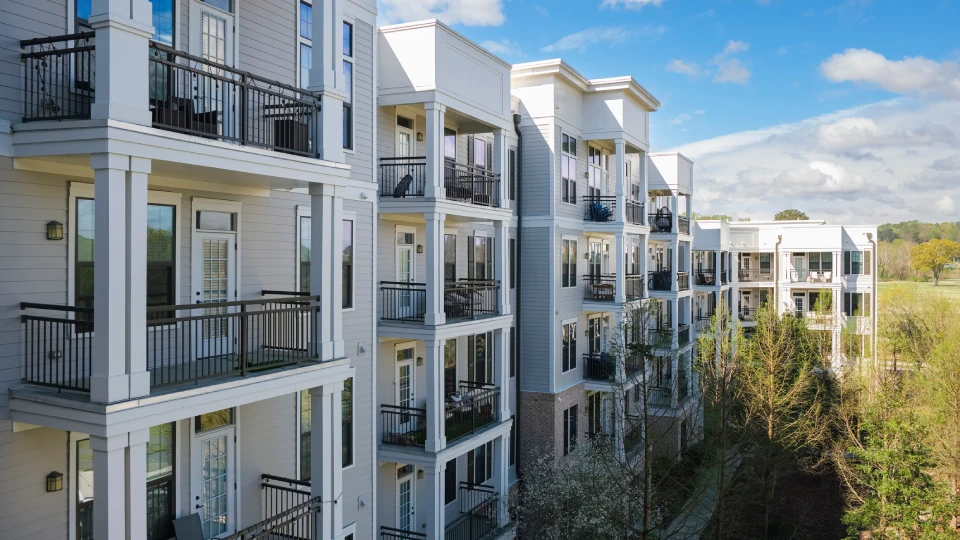
Twenty attorneys general from 19 states and the District of Columbia have formally opposed HUD’s plan to roll back its Affirmative Fair Housing Marketing (AFHM) regulations. In a letter to HUD Acting General Counsel Brian Miller, the AGs said that rescinding the AFHM rules would mean HUD is failing to fulfill its obligations under the Fair Housing Act.
HUD proposed last month to rescind the AFHM regulations, which require federally regulated properties to be affirmatively marketed to underserved groups of consumers.
“As the chief law enforcement officials of our states, we have a vested interest in ensuring equal access to housing and eradicating the harmful effects of segregation and discrimination in our communities,” the letter reads. The AGs added that a “rescission contravenes the very text and purpose of the [Fair Housing Act], requiring HUD to affirmatively administer its programs to eliminate entrenched patterns of segregation, promote integration, and prevent discrimination in the United States’ housing market. The rescission renders HUD unable to meaningfully fulfill its mandates.”
This comes at a time when HUD is increasingly facing litigation over its decisions related to fair housing policy. The National Fair Housing Alliance and other housing groups sued HUD and the Department of Government Efficiency (DOGE) over the sudden cancellation of fair housing grants in February. Still, HUD Secretary Scott Turner reaffirmed the agency’s commitment to fair housing in a video statement during Fair Housing Month in April.